

Get Rid of Mushrooms on Your Lawn: Quick Steps to Apply
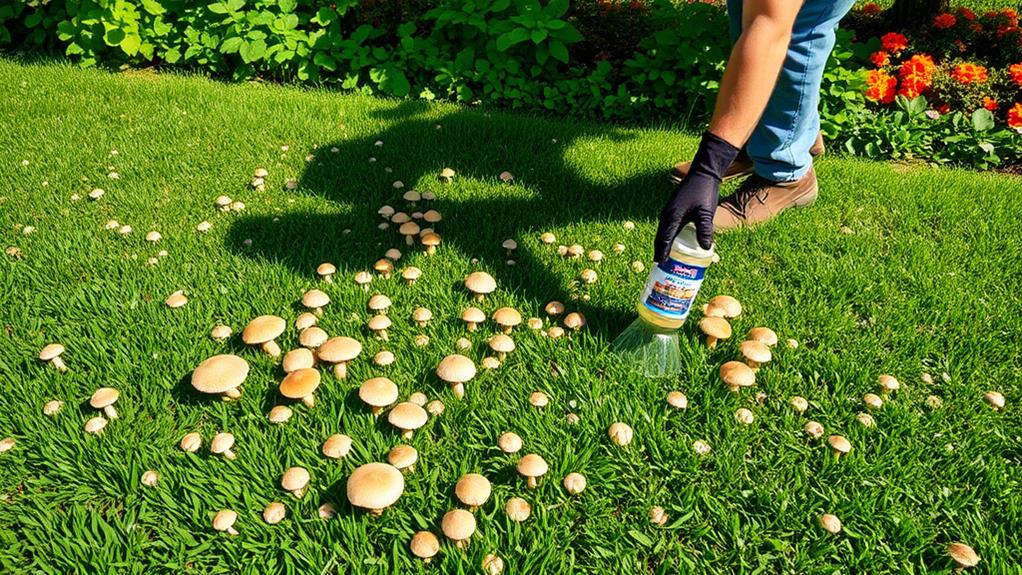
You've noticed unwelcome mushrooms sprouting on your lawn, and you're wondering how to tackle them efficiently. Initially, it's vital to identify the mushroom types to guarantee they're safe to handle. Once that's settled, you can proceed with manual removal, but there's more to it than just plucking them out. These aren't just isolated steps; maintaining your lawn's health is key, involving proper aeration, drainage improvements, and natural fungicide applications. Curious about the precise techniques and tools you'll need for each step? Let's explore how to transform your lawn into a mushroom-free zone.
Identify Lawn Mushroom Types
Identifying the types of mushrooms that pop up on your lawn is vital for both safety and garden care. Some mushrooms, like the Field Mushroom (Agaricus campestris), are edible and harmless, while others, such as the Death Cap (Amanita phalloides), are highly toxic and dangerous. To accurately identify mushrooms, pay attention to their size, shape, and color. Mushrooms can range from subtle browns and whites to striking reds and purples.
Environmental conditions greatly influence mushroom growth. You'll notice they often appear in clusters or rings, thriving in moist and shaded areas. Understanding these conditions can help you predict when mushrooms might show up. Researching local species is also important, given that over 10,000 varieties exist, and many might be growing in your Canadian lawn.
Knowing the lifecycle of mushrooms aids in identification and monitoring. They produce spores during favorable conditions, which is the best time to observe and plan for removal. By learning these details, you'll identify whether the mushrooms are toxic or edible and take appropriate action to guarantee your lawn's safety and health. This knowledge is your first step toward effective mushroom management.
Manual Removal Techniques
To safely remove mushrooms from your lawn, always wear gloves to protect yourself from potential toxins. Gently pluck the mushrooms from the base to avoid spreading spores, and use a shovel or trowel for larger ones to guarantee you get the underground mycelium. Dispose of them in sealed plastic bags to prevent spores from returning to your yard.
Hand-Picking Best Practices
When it comes to dealing with mushrooms on your lawn, a few simple hand-picking best practices can make a significant difference. First, always wear gloves to avoid direct contact with potentially toxic mushrooms and reduce the risk of skin irritation. Hand-picking involves plucking the mushrooms from the base. This technique helps prevent spore release and guarantees you remove as much of the mycelium as possible, which can extend several inches underground.
To effectively manage mushroom growth, consistent monitoring is essential. Make it a habit to regularly check your lawn for new mushrooms. The sooner you spot them, the easier it is to remove them before they have a chance to reproduce. Hand-picking is particularly effective for small infestations. For larger clusters, consider using a garden trowel to dig them out completely.
Once you've collected the mushrooms, it's important to dispose of them properly to prevent spores from spreading back into your lawn or attracting wildlife. Although it's tempting to toss them into your compost or yard waste, be sure to seal them in plastic bags before disposal to guarantee they don't find their way back into your yard.
Safe Disposal Methods
One essential step in safely disposing of mushrooms from your lawn is ensuring you don't inadvertently spread spores or mycelium. Start by wearing gloves to protect your skin from potentially harmful fungi. When you're ready to remove the mushrooms, gently pluck them from the base. This method helps minimize spore dispersal, which is vital for effective removal. Once removed, immediately dispose of them in sealed plastic bags to prevent accidental regrowth.
For larger mushroom clusters, a more aggressive approach is necessary. Use a shovel or trowel to dig out the mushrooms, ensuring you extract at least 12 inches of surrounding soil. This helps to eliminate underground mycelium and further reduces the risk of recurrence. After you've cleared the area, regularly inspect your lawn for new growth. Early removal is key in preventing the release of more spores.
To deter future mushroom growth, maintain proper lawn care practices. Focus on aeration and reducing organic debris, which can create ideal conditions for mushrooms to thrive. By following these safe disposal methods, you contribute to a healthier lawn and minimize the chance of mushroom reappearance.
Adjust Mowing Practices
Effective lawn care starts with adjusting your mowing practices to keep mushrooms at bay. By regularly mowing your lawn to a height of 2.5 to 3.5 inches, you're promoting ideal grass growth, which helps outcompete mushrooms for crucial resources. Consistent mowing guarantees your grass remains healthy and dense, reducing the space available for mushrooms to thrive. Keep in mind that mowing should be done carefully to avoid damaging the grass, as strong grass is your front line against mushroom invasion.
After mowing, always collect and dispose of grass clippings. Leaving them on the lawn can contribute to organic matter buildup, creating a favorable environment for mushrooms. By removing these clippings, you're taking an important step to reduce mushroom presence in your yard.
Don't forget to mow over any visible mushrooms. This action chops them into smaller pieces, simplifying cleanup and preventing spore release. Additionally, adjust your mowing frequency to every 1-2 weeks, especially during peak growth seasons. This regular maintenance not only fosters overall lawn health but also helps manage and reduce mushroom proliferation. Keep your lawn looking its best and mushrooms at a minimum with these practical mowing adjustments.
Improve Lawn Drainage
To improve lawn drainage and reduce mushroom growth, start by enhancing soil aeration. This involves creating holes in the soil to allow water to penetrate deeper, preventing surface pooling. Additionally, redirect excess water by installing French drains or using perforated pipes, ensuring your lawn stays dry and healthy.
Enhance Soil Aeration
Improving your lawn's drainage through soil aeration is an essential step in keeping unwanted mushrooms at bay. Aeration involves creating small holes in the soil, allowing air, water, and nutrients to penetrate deeper. This process not only promotes healthier grass growth but also reduces excess moisture that mushrooms thrive on. By decreasing soil compaction, aeration enhances drainage, preventing the water pooling that creates an ideal environment for fungi.
To maximize lawn health, aim to aerate during the growing season—spring or fall—when your grass is actively growing. This timing guarantees quicker recovery and minimizes stress on your lawn. A core aerator is an effective tool for this task, as it removes plugs of soil. These plugs decompose naturally, contributing valuable organic matter back into the soil, further improving drainage and overall soil health.
Consider combining aeration with overseeding to establish new grass that competes with mushrooms for resources, supporting a more robust lawn ecosystem. Regular aeration not only helps curb mushroom growth but also invigorates your lawn, leading to a lush, vibrant yard. With consistent attention, you'll enjoy a healthy, mushroom-free lawn.
Prevent Water Accumulation
When dealing with lawn mushrooms, preventing water accumulation is key to improving drainage and reducing the moisture that fungi love. Excess moisture is a primary contributor to mushroom growth, so focusing on proper lawn drainage can make a significant difference. Start by aerating the lawn. This process breaks up compacted soil, allowing water to penetrate deeper and reducing surface pooling. By doing so, you enhance the lawn's ability to manage excess moisture effectively.
Additionally, consider installing French drains or surface drains to redirect water away from problem areas. These systems help mitigate moisture retention in the soil, preventing the conditions that favor mushroom growth. Removing organic debris, like leaves and grass clippings, is also essential. This debris can trap water, so regular raking improves drainage by allowing water to flow freely.
Natural Fungicide Options
Among the many ways to tackle mushrooms in your lawn, natural fungicide options stand out for their effectiveness and eco-friendliness. Baking soda is a great choice; when mixed with water and sprayed on affected areas, it raises the soil's pH level, making it less welcoming for fungal growth. A vinegar solution, diluted with water, creates an acidic environment that further deters mushroom development, acting as a simple yet powerful natural fungicide.
Neem oil, derived from the seeds of the neem tree, serves as another effective option. It's known for suppressing various fungal pathogens without harming beneficial soil organisms. Applying neem oil to your lawn can help control unwanted mushrooms while maintaining the ecological balance.
Cornmeal offers a dual benefit: it suppresses mushroom growth and enriches your lawn. Its beneficial compounds hinder fungal development, making it a practical addition to your lawn care routine. Regularly applying these natural fungicides can considerably reduce mushroom populations.
Maintain Lawn Health
While natural fungicides play a significant role in managing mushrooms, maintaining your lawn's overall health is equally essential for long-term prevention. Regular aeration is vital for improving soil drainage and reducing compaction, which combats poor drainage. By doing so, you reduce excess moisture that encourages lawn fungus. Implementing a balanced fertilization plan with high nitrogen content promotes robust grass growth. This not only strengthens your lawn but helps it outcompete unwanted fungi.
Regular dethatching is another effective strategy. By removing organic debris, you eliminate a food source for mushrooms, creating a less hospitable environment for their growth. It's also important to monitor and adjust your watering practices. Avoid overwatering, as this can elevate moisture levels in the soil, creating an inviting habitat for mushrooms. Instead, aim for deep, infrequent watering to maintain ideal lawn health.
Additionally, keep your lawn clear of fallen leaves and other organic matter. This not only enhances its appearance but reduces perfect breeding grounds for mushrooms. By incorporating these practices, you create an environment less conducive to mushrooms and more supportive of a thriving, healthy lawn.
Frequently Asked Questions
What Will Kill Mushrooms but Not Grass?
You've got several options to kill mushrooms without harming your grass. Use vinegar or baking soda sparingly, cornmeal to suppress growth, neem oil for eco-friendliness, or dish soap to change soil pH. Maintain your lawn regularly.
Does Baking Soda Kill Mushrooms in the Lawn?
Yes, baking soda kills mushrooms on your lawn. Mix it with water and spray directly on mushrooms. It disrupts their cell structure and raises soil pH, making it less conducive for their growth. Apply during dry weather.
What Chemical Gets Rid of Mushrooms in Lawn?
You can use fungicides with active ingredients like propiconazole or chlorothalonil to eliminate mushrooms. Follow the label instructions closely, apply during dry periods, and wear protective gear. Keep monitoring your lawn to catch any new growth.
Does Mowing Mushrooms Spread Them?
Yes, mowing mushrooms can spread them. When you mow over mature mushrooms, their spores can disperse, leading to more growth. Remove mushrooms by hand before mowing to prevent spreading and manage your lawn's mushroom problem effectively.


